VA Cash Out Refinance Requirements | What to Know Now
A Tulsa Veteran planning repairs, a Broken Arrow homeowner considering debt consolidation, or an Owasso borrower with a conventional mortgage may all wonder whether home equity can support their next financial step.
A VA Cash Out Refinance may replace an existing mortgage and provide an eligible, qualified homeowner with part of the property’s available equity as cash. The proceeds are borrowed money secured by the home. Approval, value, loan amount, rate, payment, costs, and timing are not automatic.
The result depends on eligibility, COE, entitlement, occupancy, credit, income, debts, residual income, appraisal, liens, title, insurance, lender requirements, and underwriting. This guide explains those factors and compares major alternatives.
What Is a VA Cash Out Refinance?
A VA Cash Out Refinance replaces an existing mortgage with a new VA-backed loan and may allow an eligible borrower to receive cash from available home equity. Borrower eligibility, lender approval, primary-residence occupancy, appraisal, equity, closing costs, funding-fee treatment, title review, and final underwriting requirements still apply.
How Does a VA Cash Out Refinance Work?
The new VA-backed mortgage pays off the existing first mortgage and required liens. The current loan does not have to be a VA loan; an eligible borrower may refinance a qualifying conventional, FHA, USDA, construction, or other mortgage.
The new loan can have a different rate, term, balance, APR, and payment. After required payoffs and approved charges, the remaining amount may be delivered as cash proceeds that become part of the mortgage debt.
Current VA cash-out refinance guidance explains that qualified borrowers may use the program to take cash from equity or refinance an eligible non-VA loan. A complete review is still required before the lender can determine the available structure.
For homeowners in Tulsa, Broken Arrow, Jenks, Bixby, Owasso, Coweta, Glenpool, Sapulpa, and surrounding Oklahoma communities, the first step is usually to compare the existing mortgage with the proposed new loan. A knowledgeable VA loan specialist can help organize questions about eligibility, property value, costs, and alternatives.
An online equity estimate cannot confirm the supported property value, applicable loan-to-value limit, funding-fee treatment, or net proceeds. A file-specific review can identify which numbers still require documentation.
Review VA Cash Out Refinance Options
Who May Qualify for a VA Cash Out Refinance?
Potential applicants include Veterans, active-duty service members, certain National Guard or Reserve members, and eligible surviving spouses whose service or status meets current VA requirements. Prior use of the benefit does not automatically prevent another VA loan, but entitlement and existing VA-backed obligations may need review.
The official VA home-loan eligibility requirements address service history and qualifying applicant categories. Benefit eligibility is only one part of the decision. The lender must also evaluate credit, income, debts, occupancy, property, and the complete loan file.
A valid Certificate of Eligibility, commonly called a COE, helps confirm access to the VA home-loan benefit and may show entitlement information. It does not guarantee credit approval, a particular loan amount, a funding-fee exemption, an acceptable appraisal, or final underwriting approval. Borrowers can review the official VA instructions for requesting a COE and the website’s VA Loan Certificate of Eligibility guide.
The property generally must meet primary-residence occupancy rules. Co-borrower structure, entitlement, active-duty circumstances, and prior benefit use can affect the analysis. The lender applies current VA rules and underwriting requirements.
What VA Cash Out Refinance Requirements Should Borrowers Review?
A complete review combines benefit eligibility, borrower qualification, property analysis, and transaction rules. The VA Lender’s Handbook provides official guidance, while lenders may apply additional standards.
| VA Cash Out Refinance factor | What it means | Why it matters |
|---|---|---|
| VA eligibility and COE | The borrower must have access to the VA home-loan benefit. | A COE supports eligibility and entitlement review but does not approve the loan. |
| Primary-residence occupancy | The home must meet applicable occupancy requirements. | A vacation home or ordinary investment property may not fit the program. |
| Credit history | The lender reviews payment patterns, recent credit events, and current obligations. | Lender overlays can vary even though VA does not advertise one universal score for every lender. |
| Income and employment | Qualifying income must be stable, documented, and expected to continue. | Documentation differs for salaried, self-employed, military, retirement, and other income sources. |
| Debt-to-income ratio | Monthly obligations are compared with qualifying income. | The ratio is considered with credit, reserves, residual income, and other risk factors. |
| Residual income | Income remaining after major monthly obligations is reviewed. | VA residual-income analysis helps evaluate household affordability. |
| Property appraisal | A VA appraisal supports reasonable value and applicable property review. | The value can limit the loan and available proceeds. |
| Loan-to-value | The proposed loan is compared with the supported property value. | Current rules and lender overlays determine the permitted structure. |
| Existing liens | First mortgages, HELOCs, home equity loans, and other recorded claims are reviewed. | Required payoffs or subordination can reduce proceeds or affect approval. |
| Net tangible benefit | The new loan must provide a qualifying financial benefit under current rules. | Receiving cash alone should not replace a complete loan comparison. |
| Seasoning and recoupment | Certain VA-to-VA transactions must satisfy additional timing or cost rules. | The requirements depend on the loan being refinanced and the proposed structure. |
| Funding fee and closing costs | Program, lender, title, appraisal, tax, insurance, and settlement charges may apply. | Financed costs increase the balance and can reduce net proceeds. |
| Final underwriting | The lender reviews the complete borrower, property, and closing file. | Prequalification, appraisal completion, or conditional approval is not final approval. |
Requirements can change by lender, borrower, property, prior VA use, title findings, and loan structure. Confirm current rules rather than relying on a generic score, ratio, or equity percentage.

How Much Equity Can You Access With a VA Cash Out Refinance?
Home equity is the supported property value minus mortgages and other liens. Total equity is not the same as accessible equity, and accessible equity is not the same as net cash proceeds. The lender must account for reasonable value, the permitted loan-to-value ratio, payoff amounts, required costs, and underwriting conditions.
The VA appraisal provides an opinion of reasonable value for the transaction. An automated estimate, tax assessment, prior appraisal, or real estate listing does not control the refinance. If the VA appraisal is lower than expected, the available loan amount and cash proceeds may also be lower.
Current federal VA refinance regulations tie the maximum new loan to reasonable value and require a net tangible benefit. Lenders can apply more restrictive limits based on credit, property type, risk, or investor requirements.
The estimate starts with supported value, then accounts for required equity, lien payoffs, financed costs, and closing items. The final Closing Disclosure shows approved proceeds. A larger loan can mean a higher payment, more interest, and less equity for a future sale.
What Costs and Funding Fees May Apply?
A VA cash-out refinance may include a funding fee unless the borrower has a verified exemption. It is separate from lender, appraisal, credit, title, recording, settlement, tax, insurance, escrow, point, and lien-payoff charges.
The official VA funding-fee and closing-cost guidance lists the current fee schedule and exemption categories. The applicable amount can depend on the loan type, loan amount, prior use of the benefit, and documented exemption status. Borrowers should confirm the schedule in effect when the loan closes.
Review the website’s VA funding fee guide for a broader explanation of exemptions, financing, and first-versus-subsequent use. The VA loan closing costs guide explains lender charges, third-party fees, prepaids, escrow deposits, and credits.
Financing eligible charges may reduce the immediate cash required, but it increases the starting principal balance and potential interest. A lender credit also does not make the transaction free; it may be connected to the selected rate or pricing. Compare the loan amount, APR, payment, cash proceeds, total costs, and expected time in the home.
How Do the Appraisal and Underwriting Process Work?
The process begins with the homeowner’s goal, current mortgage, desired proceeds, and alternatives. The borrower then applies and documents eligibility, credit, income, assets, debts, occupancy, and insurance.
- Review the goal, current mortgage, liens, and possible alternatives.
- Complete the application and receive required disclosures.
- Verify the COE, entitlement, prior use, and possible funding-fee exemption.
- Review credit, income, employment, debts, residual income, and assets.
- Order and complete the VA appraisal.
- Review title, lien payoffs, property taxes, and insurance.
- Submit the complete file for underwriting.
- Compare the proposed loan using the Loan Estimate and required refinance disclosures.
- Satisfy final conditions and review the Closing Disclosure.
- Sign closing documents and complete any applicable waiting or rescission period.
A VA appraisal is not a home inspection. It supports reasonable value and property review, while underwriting evaluates the full file. Repairs, title issues, insurance, missing documents, or financial changes can affect approval or timing.
The CFPB’s Loan Estimate explainer can help borrowers review projected terms, payments, costs, and cash-to-close information. The estimate is not final approval, and figures may change when documented transaction information changes.
A property-value estimate or preliminary rate discussion cannot establish the final loan amount or proceeds. Reviewing the complete file early can reveal liens, documentation gaps, exemption questions, and alternative structures before the homeowner commits.
Review VA Cash Out Refinance Options
How Does a VA Cash Out Refinance Compare With Other Options?
A VA cash-out refinance replaces the first mortgage and may provide cash from equity. A homeowner with a favorable current rate should compare replacement costs with a second-lien option.
A VA Interest Rate Reduction Refinance Loan generally applies to an existing VA-backed mortgage and focuses on reducing the payment or creating more stable terms rather than providing ordinary cash-out proceeds. Review the official VA IRRRL guidance and the website’s VA IRRRL Refinance guide before treating the two products as interchangeable.
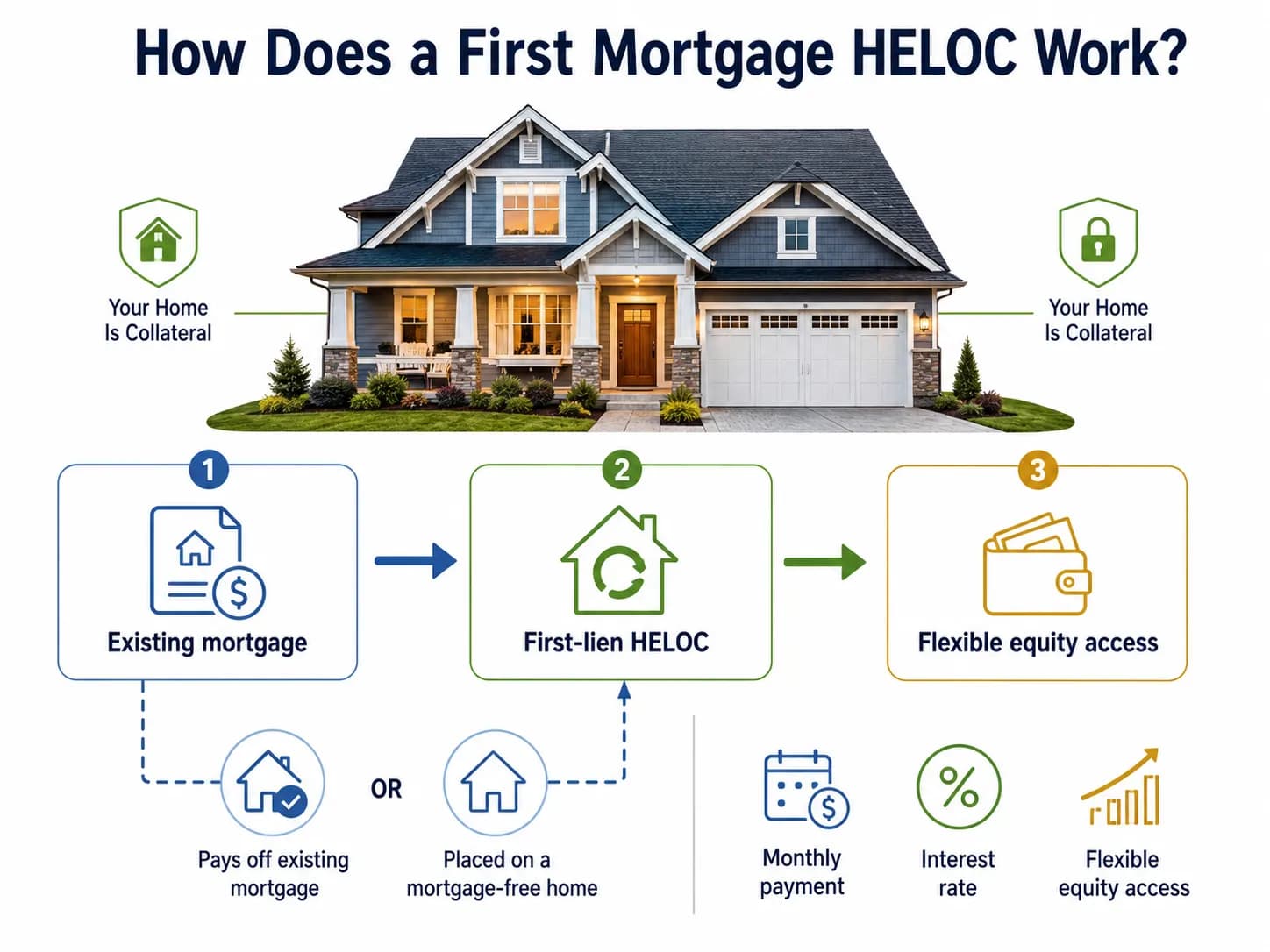
A HELOC is generally a revolving second-lien credit line, often with a variable rate and changing payment. A home equity loan generally provides a lump sum through a separate second mortgage. These options may allow the borrower to keep the current first mortgage, but they create another payment and another lien.
A conventional cash-out refinance also replaces the first mortgage but uses conventional rules. A personal loan is usually unsecured but may have a higher rate or shorter term. The CFPB’s comparison of HELOC alternatives and cash-out refinancing explains why rates and closing costs matter.
No option is universally better. Compare the current rate, remaining term, desired proceeds, new rate, new term, closing costs, funding fee, monthly payment, total repayment, tax considerations with a qualified adviser, and the time you expect to keep the property.
Should You Use Home Equity to Consolidate Debt?
Debt consolidation may deserve consideration when the borrower has a repayment plan, the mortgage remains affordable, and total costs support the decision. Risk increases when short-term debt is stretched across a long mortgage or paid-off accounts are reused.
Credit cards and many personal loans are unsecured. Paying them through a cash-out refinance converts the balances into mortgage debt secured by the home. If the new mortgage becomes unaffordable, missed payments may place the property at risk of foreclosure.
A lower rate on the consolidated balance does not automatically produce a lower total cost. Closing costs, the funding fee, a longer repayment period, and interest over time can offset the apparent benefit. Homeowners should compare total scheduled repayment and remaining equity, not only the combined monthly payment.
Borrowers should also consider emergency reserves, future expenses, spending habits, and whether a nonprofit housing or financial counselor could provide additional perspective. This guide does not provide individualized financial, legal, credit, or tax advice.
What VA Cash Out Refinance Mistakes Should Homeowners Avoid?
- Assuming VA eligibility or a COE guarantees mortgage approval.
- Using an online home-value estimate as the final appraisal value.
- Treating all home equity as cash available at closing.
- Ignoring a HELOC, home equity loan, tax lien, judgment, or other recorded claim.
- Comparing only the interest rate or monthly payment.
- Ignoring the new term, total interest, and total repayment.
- Assuming every lender permits the same loan-to-value ratio.
- Assuming the funding fee or closing costs will be waived.
- Calling a lender-credit option a free refinance.
- Replacing a favorable first mortgage without comparing second-lien alternatives.
- Consolidating unsecured debt without considering foreclosure risk.
- Using accessible equity without preserving reserves.
- Opening credit, missing payments, changing jobs, moving undocumented funds, or making major purchases during underwriting.
- Failing to compare the Loan Estimate with the Closing Disclosure.
- Assuming an appraisal, approval, or closing date is guaranteed.
Helpful insight: A useful refinance comparison considers the current mortgage, proposed mortgage, cash received, funding fee, closing costs, monthly affordability, total repayment, equity removed, equity remaining, and expected ownership period. The largest possible cash amount is not automatically the most suitable loan.
How Might a VA Cash Out Refinance Work in Oklahoma?
How Might a Tulsa Veteran Finance Major Home Repairs?
Hypothetical example: A Tulsa Veteran wants to repair the roof and update aging systems in a primary residence. The lender reviews the COE, entitlement, credit, income, debts, residual income, mortgage payoff, appraisal, estimated costs, and available equity. The homeowner compares replacing the first mortgage with opening a HELOC before choosing a direction.
How Might a Broken Arrow Homeowner Compare Debt Consolidation?
Hypothetical example: A Broken Arrow homeowner is considering paying eligible credit-card and personal-loan balances through a VA cash-out refinance. The homeowner compares the proposed payment, total repayment, funding fee, closing costs, new term, remaining equity, and the risk of turning unsecured balances into debt secured by the home.
How Might an Owasso Borrower Refinance a Non-VA Mortgage?
Hypothetical example: An eligible Owasso borrower currently has a conventional mortgage. The borrower explores replacing it with a VA-backed cash-out loan, subject to COE, occupancy, credit, income, appraisal, title, equity, and underwriting requirements. The comparison also includes conventional refinancing and second-lien options.
These examples are educational and do not predict approval, appraisal value, interest rate, payment, proceeds, costs, savings, or closing time for another borrower.

How Should You Prepare for a VA Cash Out Refinance Review?
Gather the current mortgage statement, estimated payoff, junior-lien details, property-value estimate, tax information, homeowners insurance, and flood-insurance information when applicable.
Documents may include identification, COE, military records, pay stubs, W-2s, applicable tax or business returns, bank statements, retirement statements, and explanations for major credit events. Requirements vary by income type and file.
List monthly debts, planned use of proceeds, desired cash, current rate and term, expected ownership period, reserves, and questions about exemptions, net tangible benefit, seasoning, or recoupment. Bring competing refinance or equity proposals for comparison.
The website’s Oklahoma mortgage FAQ provides additional answers about VA loans, refinancing, and home equity. A homeowner who may sell instead of refinance can review the VA Loan Assumption guide, while remembering that an assumption transfers an existing loan under approved conditions and is not a cash-out product.
Before signing, compare the Loan Estimate with the CFPB’s Closing Disclosure explainer. Check the final rate, loan amount, payment, closing costs, lender credits, prepaid items, lien payoffs, and cash proceeds. Ask for an explanation of material changes.
A file-specific review can help estimate the mortgage payoff, supported value, applicable loan-to-value, funding fee, closing costs, proposed payment, and possible net proceeds. It can also show whether keeping the first mortgage and using another option deserves consideration.
Review VA Cash Out Refinance Options
What Questions Do Homeowners Ask About VA Cash Out Refinance?
What Is a VA Cash Out Refinance?
It is a refinance that replaces an existing mortgage with a new VA-backed loan and may provide an eligible and qualified borrower with cash from available equity. Appraisal, occupancy, credit, income, costs, title, and underwriting requirements apply.
Can I Refinance a Conventional Loan Into a VA Loan?
Potentially. An eligible borrower may be able to refinance a qualifying conventional or other non-VA mortgage into a VA-backed cash-out loan, subject to current VA rules, lender requirements, property review, and final approval.
How Much Cash Can I Receive From a VA Cash Out Refinance?
The amount depends on reasonable value, the permitted loan-to-value ratio, existing mortgages and liens, lender limits, financed charges, funding-fee treatment, and underwriting. Total home equity does not equal final cash proceeds.
Does a VA Cash Out Refinance Require an Appraisal?
A VA appraisal is generally part of the cash-out refinance review and supports reasonable value. Current lender and program requirements should be confirmed. The appraisal is not a complete home inspection.
What Credit Score Is Needed for a VA Cash Out Refinance?
VA does not advertise one universal minimum used by every lender. Individual lenders may establish credit-score overlays and review the full credit history, income, debts, residual income, property, and transaction.
Does the VA Funding Fee Apply to a Cash Out Refinance?
A funding fee may apply unless the borrower has a verified exemption or another current exception. The applicable schedule, prior benefit use, loan amount, and exemption status should be confirmed for the actual closing.
Is a VA Cash Out Refinance Better Than a VA IRRRL or HELOC?
Not automatically. A cash-out refinance, IRRRL, and HELOC serve different purposes. Compare the existing mortgage, desired cash, proposed rate, payment, term, costs, total repayment, and long-term goals.
Should I Speak With a Mortgage Professional Before Refinancing?
Yes. A licensed mortgage professional can review eligibility, liens, income, appraisal expectations, estimated costs, net tangible benefit, and alternatives. Final approval and figures still depend on the complete application and underwriting.
What Should Readers Verify Before Relying on This Guide?
This article provides general mortgage education, not legal, tax, investment, credit-repair, military-benefits, or individualized financial advice. VA rules, lender overlays, fees, appraisal procedures, and costs can change.
A VA Cash Out Refinance does not guarantee approval, a particular property value, cash proceeds, a lower rate, a lower payment, savings, a funding-fee exemption, or a specific closing date. Final results depend on eligibility, COE, entitlement, occupancy, credit, income, debts, residual income, reasonable value, existing liens, title, insurance, lender requirements, market conditions, and underwriting.
Last Updated: June 25, 2026
Reviewed By: Jeff Leek, NMLS 303051